
Repair TipsLocal Guides
Why is my water heater leaking from the bottom in Spring
A water heater leaking from the bottom in Spring TX is usually a tank failure, not a loose fitting. Here is how to tell the difference and what it costs to fix.
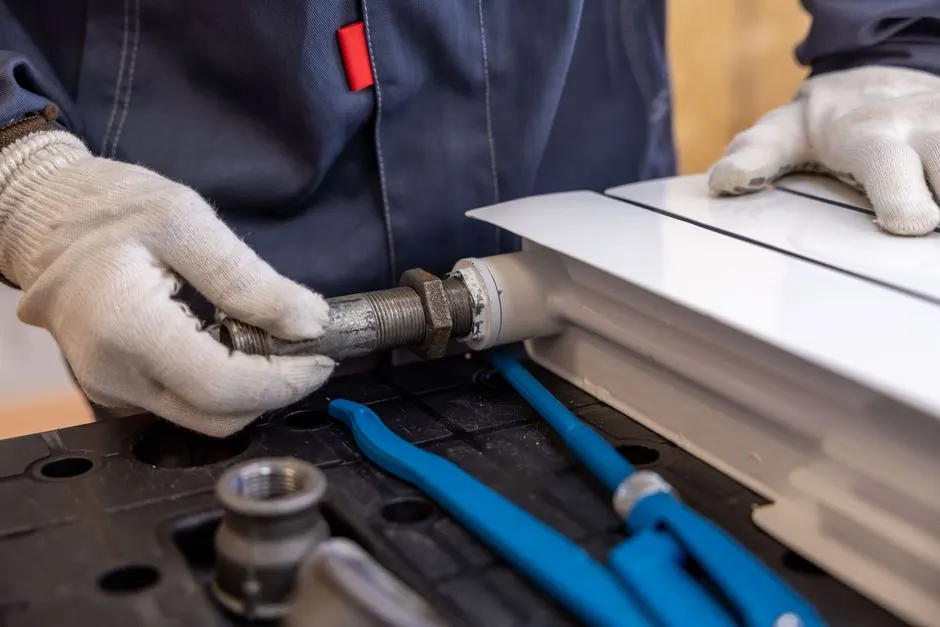
A water heater leaking from the bottom in Spring, Texas almost always means the tank itself has failed, not a loose pipe or valve. On a standard tank-style heater, water pooling underneath the unit comes from a cracked inner steel shell or a rusted-out drain valve, and once that shell cracks, no sealant or patch will hold it. The rest of this post walks through the specific causes we see in Spring, how to confirm a tank leak in about five minutes, what repair versus replacement costs in 2026, and when it is time to shut the unit down and call us.
The short answer: bottom leaks are rarely a simple fix
A water heater leaking from bottom in Spring TX is a tank failure until proven otherwise. The bottom of a tank heater is where sediment collects, where the burner sits on a gas unit, and where the drain valve threads into the shell. All three of those spots sit below the water line, so any leak there has direct access to the full tank volume.
That matters because a bottom leak does not drip politely. Once the inner glass lining cracks or the steel shell rusts through, the tank is holding back 40 to 80 gallons of hot water with a compromised wall. We have watched a slow weep turn into a steady stream in under an hour on a 12-year-old unit in a garage off Louetta Road.
If you are seeing water on the floor right now, shut off the cold water supply valve on top of the tank and turn off the gas or flip the breaker. Then call us. A leaking tank is not a wait-until-Monday problem.
Why is my water heater leaking from the bottom in Spring TX?
Water heater leaking from bottom in Spring TX traces back to five causes, and four of them mean the tank is done. Here is what we actually find when we pull the unit out.
1. Sediment buildup and a cracked tank floor
Spring sits on some of the hardest water in the Houston metro. Calcium and magnesium settle out of the water and pile up on the tank floor, and that layer insulates the bottom of the tank from the burner. The steel overheats, the glass lining flexes, and it cracks. Once the lining cracks, water hits bare steel and the rust starts eating through.
You will usually hear popping or rumbling before you see water. That sound is steam trapped under the sediment layer. If your heater has been popping for months and now there is a puddle, the sediment did its damage.
2. A rusted-out tank shell
Every tank heater has a sacrificial anode rod inside that corrodes so the tank does not. Anode rods last 3 to 5 years in our water. Most homeowners never replace them, so the rod dissolves and the tank shell becomes the anode. Rust-through at the bottom seam is the single most common failure we see on units past the 8-year mark.
3. A failed drain valve
The drain valve threads into the tank about 4 inches off the floor. Its washer and plastic body crack with age, and it drips straight down onto the burner compartment. This is the one bottom leak that is genuinely repairable, and it is also the one homeowners most often misdiagnose as a dead tank.
4. A leaking T&P relief valve
The temperature and pressure relief valve sits on the side or top, but its discharge pipe runs down the tank and ends 6 inches above the floor. When the T&P opens, water runs down that pipe and pools at the base, which looks exactly like a bottom leak. If your heater is leaking water in Spring, Texas and the puddle appears only after the burner runs, the T&P is the likely source.
5. Loose inlet or outlet connections
On a gas unit, the dielectric nipples on top can loosen and water tracks down the side of the tank to the floor. It is a cheap fix, but you have to catch it before the water rusts the tank jacket from the outside in.
How to tell a tank leak from a fitting leak
You can narrow this down yourself in about five minutes with a dry rag and a flashlight. Do this before you call anyone.
- Shut off the water supply and the heat source. Let the tank sit for 30 minutes.
- Dry the entire bottom of the tank, the floor around it, and the pipes above it.
- Turn the cold water supply back on only. Do not relight the burner yet.
- Watch the base for 10 minutes. Water appearing at the seam between the tank and the base ring means the shell is compromised.
- If the base stays dry, relight the burner and watch again. Water that shows up only when the burner runs points to the T&P valve or a sediment-related crack.
Water from the top fittings will track down the side and fool you. Water from the tank seam shows up fast and does not stop. That distinction is the whole ballgame.
If you cannot tell, or the water is coming from somewhere you cannot see, our leak detection Spring TX service uses moisture meters and thermal imaging to trace the source without tearing into the wall or floor.
Can a water heater leaking from the bottom be repaired in Spring TX?
A bottom leak from a drain valve or a loose fitting can be repaired for $150 to $350 in 2026. A bottom leak from the tank shell or the tank floor cannot be repaired at all. There is no epoxy, no weld, and no liner that survives 150-degree water and 60 PSI of pressure for more than a few weeks.
We get asked this constantly, and we give the same answer every time: if the water is coming through the steel, you are buying a new heater. Anyone who tells you otherwise is selling you a patch that will fail while you are at work.
Here is the honest breakdown:
- Drain valve replacement: $150-$300, 1 hour, worth it on a tank under 6 years old.
- T&P valve replacement: $175-$350, 1 hour, worth it if the tank is otherwise sound.
- Fitting tightening or nipple replacement: $125-$250, under an hour.
- Tank shell or floor leak: not repairable. Replacement only.
One more thing worth knowing: a tank that has been leaking for weeks has usually soaked the drywall, the pan, and sometimes the subfloor. We check for that damage before we set a new unit, because dropping a new heater on a wet, soft platform just means the next leak does more damage.
Repair vs. replace: what makes sense in 2026
Typical 2026 pricing in the Spring area runs $1,200 to $2,400 for a standard 40 or 50-gallon tank water heater installed, and $2,800 to $4,500 for a gas tankless unit installed. Those numbers include the unit, the permit, the pan, the expansion tank, and haul-away of the old heater.
Use these rules of thumb:
- Under 6 years old, leak from a valve or fitting: repair it.
- Over 8 years old, leak from the tank: replace it. You are on borrowed time either way.
- Over 10 years old, any bottom leak: replace it. A repair is money into a tank that is already past its design life.
- Rusty water, popping sounds, and a bottom leak together: replace it today.
If you are replacing, this is also the moment to decide between another tank and a tankless unit. A tankless water heater installation Spring TX costs more up front, but it eliminates the tank-failure problem entirely because there is no tank to rust through. For a family of four in a Spring two-story, we usually size a gas tankless at 9 to 11 gallons per minute.
If you are staying with a tank, we install a new one with a fresh expansion tank, a new pan with a drain line, and a code-compliant T&P discharge pipe. If you just need the current unit looked at, our water heater repair Spring TX team can diagnose it same day and tell you straight whether it is worth fixing.
What to watch out for when your water heater leaks
Most of the expensive water heater damage we see in Spring did not come from the leak itself. It came from what the homeowner did in the first hour.
- Do not keep running the unit. On a gas heater, water dripping into the burner compartment can put out the flame while gas keeps flowing. Shut the gas off at the valve.
- Do not ignore a slow weep. A tank seam that weeps a cup a day will fail completely, usually at 2 a.m. on a holiday weekend.
- Do not patch the tank. Epoxy putty on a pressurized tank is a temporary cosmetic fix that hides the real problem.
- Do not skip the pan and drain line on a replacement. A $60 pan and a $40 drain line turn the next failure into a minor cleanup instead of a flooded garage.
- Do not put the new heater back in the same corner without checking the platform. If the old leak rotted the stand, the new 150-pound tank is sitting on soft wood.
One more: if your heater sits in the attic, which is common in newer Spring builds, a bottom leak is a ceiling problem within hours. We treat attic units as emergencies for that reason.
We work across the whole area, including older homes where the plumbing has been patched a few times. If you are in one of the established neighborhoods, our plumbers Spring TX in Old Town Spring handle a lot of these calls, and the vintage of the plumbing changes what we recommend.
When to call a professional
Call us when the water is coming through the tank, when you smell gas, when the breaker trips every time the element kicks on, or when you cannot find the source after drying everything down. Those are all signs the job is past a DIY fix.
We handle the whole thing: shut down the unit, drain it, pull it out, check the platform and the pan, and either repair the valve or set a new heater the same day. We quote the price before we start, and we do not leave until the new unit is holding pressure and the floor is dry.
As a plumber in Spring TX, we see this exact failure every week, and it is one of the few plumbing problems where the right answer is usually obvious once someone qualified looks at it.
Frequently Asked Questions
Why is my water heater leaking from the bottom in Spring TX?
The most common cause is a cracked or rusted tank shell, which happens faster in Spring because of hard water and sediment buildup. A failed drain valve or a leaking T&P relief valve can also pool water at the base. If water appears at the seam between the tank and the base ring, the tank has failed.
Can a water heater leaking from the bottom be repaired in Spring TX?
Only if the leak is from the drain valve, T&P valve, or a loose fitting. Those repairs run $150 to $350. A leak through the tank shell or tank floor cannot be repaired and the unit must be replaced. No sealant holds on a pressurized tank past a few weeks.
Should I replace my water heater if it leaks from the bottom in Spring Texas?
Yes, if the tank is over 8 years old or the leak is coming through the steel. A tank-style heater has a design life of 8 to 12 years, and a bottom tank leak means the shell is compromised. Replacement runs $1,200 to $2,400 installed in 2026.
How long can I wait before replacing a leaking water heater?
Hours, not weeks. A tank seam that is weeping can fail completely without warning and dump 40 to 80 gallons into your garage, attic, or closet. Shut off the water and gas now, then schedule replacement the same day if possible.
Does homeowners insurance cover a leaking water heater in Spring TX?
Most policies cover the water damage the leak causes but not the heater itself, since a worn-out tank is considered normal wear. Document the leak with photos before cleanup and call your adjuster. A pan with a drain line and an annual flush reduce the odds of a claim.
Get help with plumbers Spring TX in Spring
If your water heater is leaking from the bottom, we can be at your door today, confirm whether it is a valve or the tank, and get hot water back the same visit. Call Plumbers Spring TX at +1 (831) 293-1204 and we will give you a straight answer and a price before we start.